
Chronic Wrist Pain

Persistent wrist pain that doesn’t have a clear cause can be incredibly frustrating, limiting your activities and affecting your quality of life. We emphasize the importance of taking a good history from you of how your symptoms developed combined with a thorough physical examination to determine the diagnosis or the possible explanations for your pain. Advanced diagnostic techniques are an important adjunct to confirm a diagnosis but should nDr. French strongly believes that the diagnosis you are given needs to match your symptoms and physical findings, especially with as complex a joint as the wrist. With an accurate diagnosis that is consistent with your symptoms, we have highly specialized surgical solutions to provide a lasting solution. 
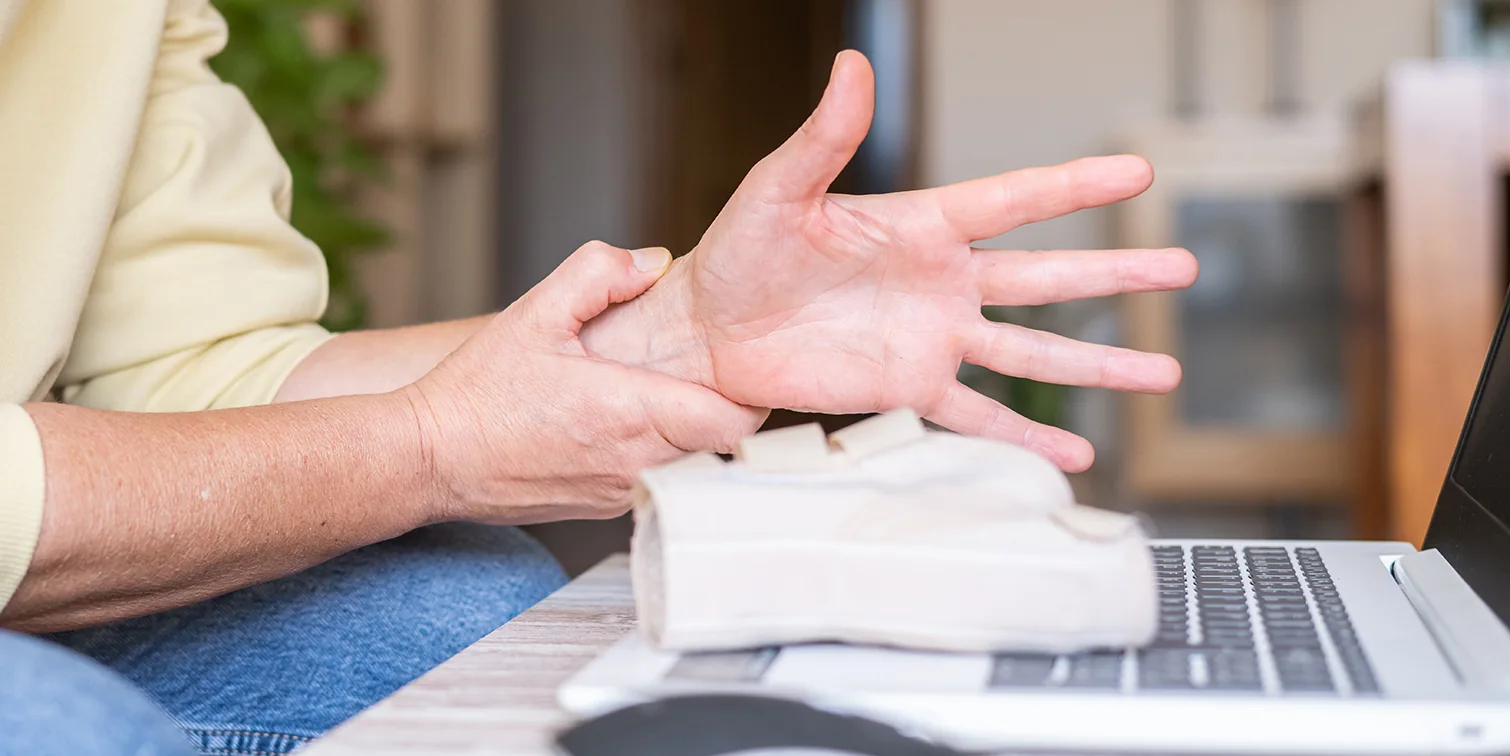
Chronic Wrist Pain with Dr. Rod French

Sub-headline: It’s Time for a Definitive Answer to Your Chronic Wrist Pain. 

Persistent wrist pain that doesn’t have a clear cause can be incredibly frustrating, limiting your activities and affecting your quality of life. We emphasize the importance of taking a good history from you of how your symptoms developed combined with a thorough physical examination to determine the diagnosis or the possible explanations for your pain. Advanced diagnostic techniques are an important adjunct to confirm a diagnosis but should nDr. French strongly believes that the diagnosis you are given needs to match your symptoms and physical findings, especially with as complex a joint as the wrist. With an accurate diagnosis that is consistent with your symptoms, we have highly specialized surgical solutions to provide a lasting solution. 

Moving Beyond the Mystery of Persistent Pain. 

If you’ve been struggling with chronic wrist pain, you’ve likely been on a long journey seeking answers. The wrist is one of the most complex joints in the body, and pain can stem from a variety of subtle issues that are difficult to diagnose. Many wrist injuries and conditions present with very similar symptoms so a thorough approach that does not skip any steps in making the diagnosis is paramount. Our approach is founded on getting to the root of the problem to create a targeted and effective treatment plan. 

    Why the Wrist is So Complex. 

    Your wrist is an intricate collection of eight small bones, numerous ligaments, and critical cartilage structures, all working together to provide an incredible range of motion. When one of these small components is injured, it can cause widespread pain and instability that is difficult to pinpoint. A precise diagnosis from a specialist is the most critical first step. In some cases, Wrist Arthroscopy, a minimally invasive “keyhole” technique, allows Dr. French to use a tiny camera to look directly inside the joint, providing a definitive diagnosis and paving the way for a targeted solution. 

      Identifying the Source of Your Instability and Pain. 

      TFCC Tears

      • The Triangular Fibrocartilage Complex (TFCC) is a crucial cartilage structure on the small-finger side of your wrist. It acts like a cushion and a major stabilizer. A tear in the TFCC, often from a fall or a repetitive twisting injury, is a common source of deep, persistent wrist pain and a clicking sensation. 

      DRUJ Instability

      • The Distal Radioulnar Joint (DRUJ) is the joint between the two forearm bones (radius and ulna) at the wrist. It is essential for rotating your forearm, such as when turning a key or a doorknob. When the ligaments that support the DRUJ are injured, the joint can become unstable, leading to painful clicking, weakness, and a loss of grip strength. 

      ECU Subluxation

      • The Extensor Carpi Ulnaris (ECU) tendon aids in extending the wrist and runs along the outside of the forearm (the little finger side). Where is crosses over the wrist, it is intimately associated with the TFCC and is normally stabilized as it runs through a small tunnel (the ECU subsheath).  Torsional forces to the wrist, a common occurrence in athletes in the ball and stick sports like golf, hockey and tennis, can lead to rupture of this tunnel causing pain and snapping of the tendon.  

      Previous Trauma  

      • Many times, those old “wrist sprains” we had in our youth can come back to haunt us. Those “sprains” may have actually been a fracture of the scaphoid that has never healed leading to a scaphoid nonunion – or it may have been a tear of the important ligament holding the scaphoid and lunate bones together (the scapho-lunate ligament). For decades the wrist can be pain free but motion slowly declines and pain begins to set in.  

        Reconstructing Your Wrist for Stability and Relief. 

        Arthroscopic TFCC Repair 

        • For many tears of the TFCC, a minimally invasive repair is the ideal solution. Using an arthroscope, Dr. French can meticulously suture and repair the torn ligament through small incisions. This advanced technique promotes healing, restores stability to the wrist, and often allows for a quicker recovery than traditional open surgery. 

        DRUJ Reconstruction 

        • For significant instability of the DRUJ, a complex ligament reconstruction is often necessary. In this sophisticated procedure, Dr. French rebuilds the damaged ligaments, sometimes using a spare tendon as a graft, to restore the natural stability and mechanics of the joint. This surgery is designed to eliminate painful clicking and restore rotational strength to your forearm and wrist. 

        Ligament Reconstruction 

        • For scapholunate and other ligament tears, these are rarely diagnosed acutely and require a later reconstruction. Many options exist but early motion to prevent stiffness is an important consideration. Dr. French will often augment tendon grafts with an Internal Brace®, effectively an internal seatbelt, to support the graft and allow early range of motion. 

        Scaphoid Non-union 

        • If arthritis has not set in yet, there is the potential to heal the nonunited scaphoid. Recent advances now allow Arthroscopic Bone Grafting (ABG) of the scaphoid thereby avoiding open surgeries that strip the blood supply to the scaphoid. ABG of the scaphoid is less painful and has a healing rate >95% in large studies. 

          The Sub-Specialized Expertise Your Wrist Demands. 

          Diagnosing and treating complex issues like TFCC tears and DRUJ instability is a highly specialized field of surgery. While hand surgery is mostly done in Canada by plastic surgeons and arm surgery performed by orthopedics, both specialties do not in general treat the wrist.  Wrist surgery is done almost equally by a small group of both plastic surgeons and orthopedic surgeons who have developed strong interests in the challenges of this complex joint. . Additional training after completing residency is required along with a deep understanding of the intricate mechanics of the wrist. Dr. French’s Harvard fellowship in Hand, Wrist, and Microsurgery, combined with his more than two decades of experience with professional athlete’s hand and wrist injuries, provides the sub-specialized skill set needed to achieve the best possible outcomes for these challenging problems. 

          Don't let hand or wrist dysfunction dictate your life any longer.

          If you're ready to move towards a future of restored function and relief, take the empowering first step today.
          Dr-Rod-French-Favicon
          © 2026 Drs. R & K French Inc. All rights reserved.