
Ligament Instability

An unstable joint in your hand or wrist can undermine your confidence and performance, causing pain and weakness with every movement. We offer advanced ligament repair and reconstruction to restore the stability you need to get back to your peak. 
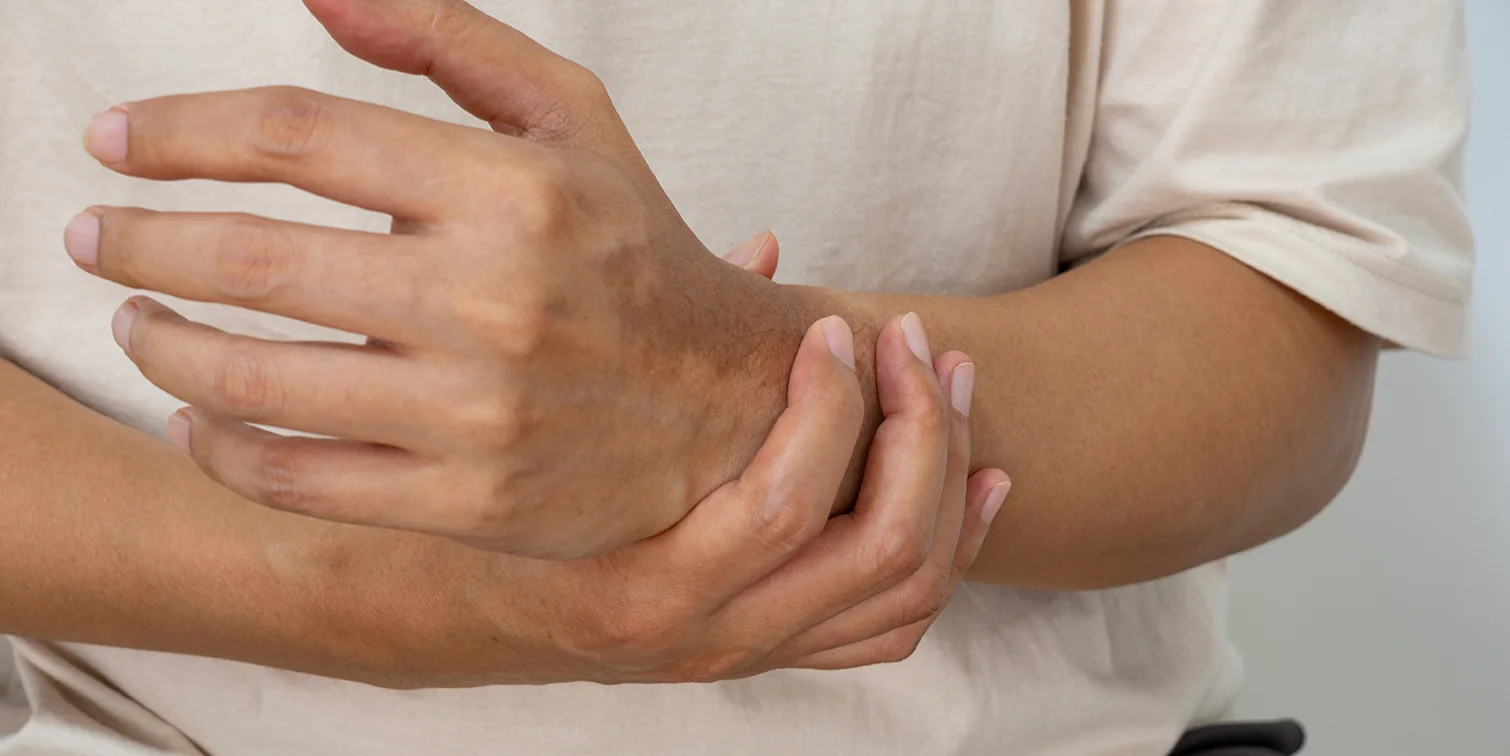
Ligament Instability could benefit from assistance with Dr. Rod French

Regain the Strength and Stability You Depend On. 

An unstable joint in your hand or wrist can undermine your confidence and performance, causing pain and weakness with every movement. We offer advanced ligament repair and reconstruction to restore the stability you need to get back to your peak. 

When Your Hand or Wrist “Gives Way,” It’s a Sign of a Deeper Problem.

If you’ve experienced a feeling of your hand or wrist “giving way,” clicking, or a general sense of weakness, you may be dealing with ligament instability. This condition occurs when the tough, fibrous bands that hold your joints together are stretched or torn. For athletes and active individuals, this can be a career- or lifestyle-altering problem, preventing you from participating in the activities you love with confidence. 

The Stabilizers of Your Joints.  

Ligaments are the strong, rope-like tissues that connect bones to other bones. Think of them as your body’s natural stabilizers. In the hand and wrist, a complex network of ligaments holds the small bones together, allowing for a remarkable range of controlled, precise movement while preventing the joints from dislocating or moving in abnormal ways. When a key ligament is injured, this stability is lost. 

Identifying the Source of Your Instability.

Ulnar Collateral Ligament (UCL) Tear / “Skier’s Thumb”

  • The UCL is the main stabilizing ligament on the inside of the thumb’s knuckle. It is commonly injured in a “jamming” incident or a fall, especially in sports like skiing, hockey, football, and skiing. A complete tear of the UCL will not heal on its own and often requires surgical repair to restore a strong, stable pinch and grip. 

Scapholunate Ligament Tear

  • The scapholunate ligament is a small but critical stabilizer in the middle of the wrist. It is the most commonly torn ligament in the wrist, often as the result of a fall onto an outstretched hand. If left untreated, a tear in this ligament can lead to a predictable pattern of wrist arthritis and a significant loss of function over time. 

Rebuilding Your Joint for Lasting Stability.  

Direct Ligament Repair 

  • For acute (recent) tears, the ideal solution is a direct, anatomic repair. In this procedure, Dr. French meticulously re-attaches the torn ligament back to the bone, often using tiny, strong anchors and sutures. The goal is to restore the natural anatomy of the joint and allow the ligament to heal in its correct position. 

Ligament Reconstruction 

  • When a ligament injury is chronic, or the tissue is too damaged to be repaired directly, a ligament reconstruction is necessary. This sophisticated procedure involves using a piece of a spare tendon from your wrist or forearm as a graft. The graft is then used to build a new, strong ligament, effectively restoring stability to the joint. 

The Expertise Required for High-Performance Recovery.  

Successful ligament surgery is a procedure of precision. The goal is to restore the perfect amount of tension—enough to make the joint stable, but not so much that it becomes stiff. This is especially critical for athletes who need to return to high-level activities. Dr. French’s deep experience treating elite athletes gives him a unique understanding of the demands placed on these joints and the meticulous techniques required to ensure a durable repair and a successful return to sport. 

Don't let hand or wrist dysfunction dictate your life any longer.

If you're ready to move towards a future of restored function and relief, take the empowering first step today.
Dr-Rod-French-Favicon
© 2026 Drs. R & K French Inc. All rights reserved.