
Bone Grafting

You’ve done everything right. You’ve endured the cast, you’ve been patient, but the bone has stubbornly refused to heal. A fracture that fails to unite (a “nonunion”) is one of the most frustrating and challenging problems in hand & wrist surgery, leaving you with persistent pain, instability, and the fear of permanent disability. 
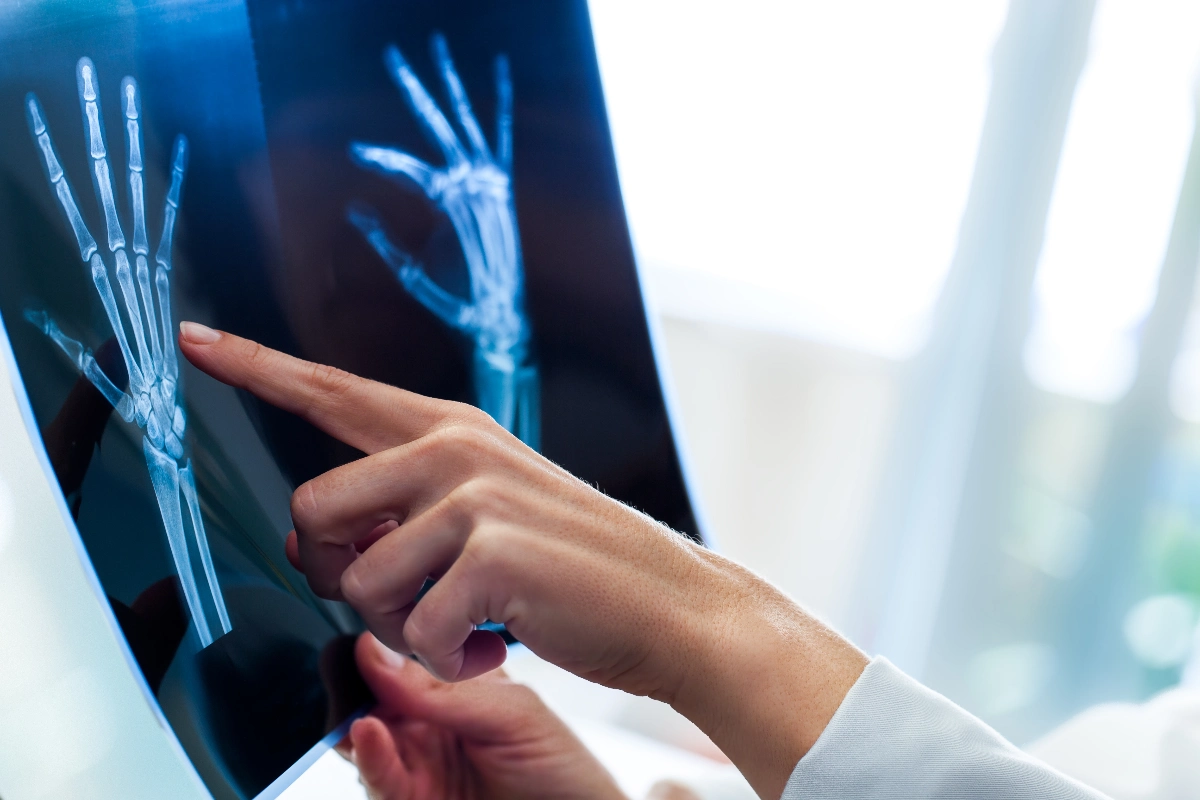
A doctor points at a hand X-ray on a lightbox, examining the bones. The atmosphere is clinical and focused, suggesting medical analysis. Bone Grafting for Hand & Wrist Dr. Rod French Vancouver

Bone Grafting: The Key to Healing Complex Fractures 

You’ve done everything right. You’ve endured the cast, you’ve been patient, but the bone has stubbornly refused to heal. A fracture that fails to unite (a “nonunion”) is one of the most frustrating and challenging problems in hand & wrist surgery, leaving you with persistent pain, instability, and the fear of permanent disability. 

When a bone is unable to heal on its own, it needs a careful assessment of “why” it didn’t heal in order to fix it. The type and location of the fracture, micro-motion at the fracture site, and patient factors like smoking can all affect a bone’s ability to heal properly. Along with identifying and correcting ALL of the factors that led to a non-union, these conditions require more than just stability—it needs a biological boost. Bone Grafting is a surgical technique that provides the essential building blocks to kick-start and successfully complete the healing process. As a Harvard-trained specialist in complex hand and wrist reconstruction, Dr. Rod French has the expertise to perform these sophisticated procedures both open and arthroscopically, offering a definitive solution for even the most challenging healing problems. 

Providing the Building Blocks for a Solid Union 

Think of a non-healing fracture like a garden where the soil is depleted; no matter how much you water it, nothing will grow. A bone graft is like adding fresh, nutrient-rich soil and fertilizer. It is a surgical procedure where bone is transplanted into the nonunion site to stimulate a robust healing response. 

The goal of bone grafting is to provide the three key ingredients for bone healing: 

  1. A Scaffold (Osteoconduction): A structural framework for new bone to grow across. 
  1. New Bone Cells (Osteogenesis): Living cells that can build new bone. 
  1. Growth Factors (Osteoinduction): The chemical signals that tell the body to start the healing process. 

This technique is most commonly used to treat a nonunion fracture or as part of a corrective osteotomy to fix a fracture that has healed in the wrong position. 

A Solution for a Fracture That Has Failed to Heal 

Bone grafting is a powerful reconstructive tool used for complex healing problems. You are likely a candidate if you have: 

  • A diagnosed nonunion, where your fractured bone has shown no signs of healing over several months. 
  • malunion (a bone that has healed crookedly) that requires a corrective surgery (osteotomy) where a gap will be created in the bone. 
  • A fracture with significant bone loss from the initial trauma. 
  • A notoriously difficult-to-heal fracture, such as a scaphoid nonunion, which often requires a specialized type of bone graft. 

Stop the Degeneration. Start the Healing. 

A nonunion fracture isn’t just a static problem; it’s an unstable area that has failed to heal with ongoing motion where there should be stability. With motion between the two ends of the previous fracture, the abnormal mechanics cause further bone loss, which can lead to a loss of blood supply to some areas of bone, and may accelerate the development of arthritis in neighbouring joints. Every month spent on a public waitlist is a month during which your wrist’s long-term health could be declining. 

Choosing private care provides timely access to an expert who can stop this process. It allows you to proceed with a definitive reconstructive procedure without delay, giving you the best possible chance to heal your fracture before the onset of severe arthritis, preserving the health of your joint. 

A Meticulous Plan for a Successful Union 

  1. The Initial Consultation with Dr. French: Your journey begins with a detailed evaluation, including advanced imaging like a CT scan, to fully understand the anatomy of your nonunion. Dr. French will discuss the different types of bone grafts and create a personalized surgical plan. 
  1. Preparing for Your Surgery: Our team will provide clear pre-operative instructions. 
  1. The Day of the Procedure: The surgery is performed in a state-of-the-art private surgical facility. Dr. French will first prepare the nonunion site, removing any unhealthy scar tissue, harvest the bone graft (from the distal radius of the same arm), and pack it as tightly as possible into the nonunion site. Rigid fixation of the two bone ends, along with meticulous attention to the bone graft conforming to the normal anatomical shape of the bone are critical final steps. 
  2. Fixation: After the graft is placed, the bone is rigidly stabilized with screws buried within the bone or a plate and screws to hold it perfectly still while it heals. 

Types of Grafts: 

  1. Autograft: The gold standard, using your own bone (often from your wrist or hip), which contains all three essential healing ingredients. 
  1. Allograft: Sterile, donated bone from a bone bank, which provides a scaffold for your own cells to grow across. 
  1. Vascularized Bone Graft: A highly advanced microsurgical technique for the most challenging cases (like a scaphoid nonunion), where a piece of bone is transferred with its own artery and vein to bring a living blood supply directly to the nonunion site. 

Patience and Protection: Giving the Graft Time to Work 

The goal of bone grafting is to stimulate a new healing process, and this takes time. 

  • Initial Immobilization: You will be in a cast or splint for at least the first 2 weeks. Depending on how well the affected bone was able to be stabilized during surgery, early motion may be possible after two weeks. In some cases, an extended period of immobilization in a splint (up to  8-12 weeks)  to protect the fracture site and allow the graft to incorporate and the bone to unite is needed. 
  • Monitoring: Your healing will be closely monitored with regular X-rays to confirm that the bone is successfully bridging the gap. 
  • Rehabilitation: Once solid healing is confirmed, you will begin working with a Certified Hand Therapist to safely restore your motion and strength. 
  • The Outcome: A successful bone grafting procedure results in a solid, united bone. This provides profound pain relief, restores strength and stability to your hand or wrist, and allows you to confidently return to your life and activities. 

Frequently Asked Questions 

What is a bone graft for a broken wrist? 

It’s a surgical procedure where bone is transplanted to the site of a non-healing fracture to provide the biological building blocks (cells, scaffold, and growth factors) needed to stimulate and achieve a solid union. 

How long does it take for a bone graft to heal? 

The process is slow and requires patience. While every case is different, it typically takes a minimum of 8-12 weeks for the graft to incorporate and the bone to show strong signs of healing on an X-ray. 

What is a nonunion fracture?

A nonunion is when a broken bone fails to heal on its own. Instead of the two ends uniting, the body forms a type of scar tissue in the gap, leading to persistent pain and instability. 

What are the risks of bone grafting surgery?

The biggest risk is that the bone may still fail to heal, even with a graft. Other risks are rare but can include infection, pain at the donor site (if an autograft is used), hardware issues, and stiffness. 

More Articles about Fracture & Trauma Care.

Looking for other treatments or procedures?

Don't let hand or wrist dysfunction dictate your life any longer.

If you're ready to move towards a future of restored function and relief, take the empowering first step today.
Dr-Rod-French-Favicon
© 2026 Drs. R & K French Inc. All rights reserved.