The loss of feeling or movement in your hand is a frightening experience. Whether it’s the result of a traumatic injury or a chronic condition, damage to the nerves can threaten your livelihood and your identity. These delicate structures are the body’s electrical wiring, and when they are cut, crushed, or compressed, it takes a high level of skill to restore their function.
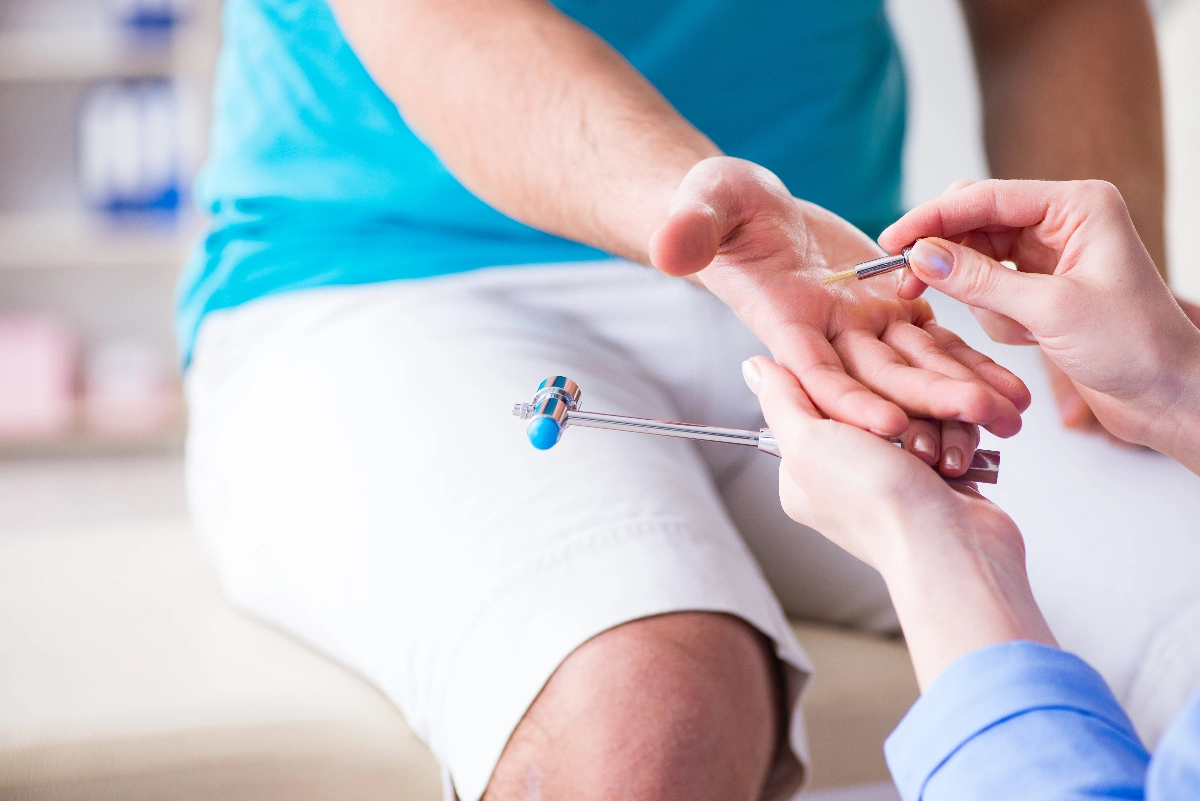
The loss of feeling or movement in your hand is a frightening experience. Whether it’s the result of a traumatic injury or a chronic condition, damage to the nerves can threaten your livelihood and your identity. These delicate structures are the body’s electrical wiring, and when they are cut, crushed, or compressed, it takes a high level of skill to restore their function.
Fortunately, there is hope. Through a suite of advanced procedures, including Neurolysis (nerve release), Direct Nerve Repair, and Nerve Grafting, it is often possible to restore function and feeling. As a Harvard-trained specialist in Reconstructive Plastic Surgery and Microsurgery, Dr. Rod French possesses the expertise required to perform these delicate, life-changing operations. He is your expert guide on the path from injury and uncertainty to reconnection and recovery.
Nerves can be damaged in different ways, and each type of damage requires a unique solution. The goal of any nerve surgery is to either give the nerve the space it needs to function or to perfectly restore its structure so it can heal.
This is a procedure for a “pinched” or compressed nerve. Decompression involves surgically releasing the tight tissue or ligament that is squeezing the nerve, giving it room to breathe and function properly again. This is the procedure used to treat conditions like Carpal Tunnel Syndrome (median nerve compression at the wrist) and Cubital Tunnel Syndrome (ulnar nerve compression at the elbow).
When a nerve is cleanly severed by a traumatic cut, a Direct Nerve Repair is the ideal solution. This is a delicate procedure where the two ends of the nerve are meticulously aligned and sutured back together under a high-powered operating microscope, providing the best opportunity for the nerve fibers to regrow.
When an injury crushes or removes a segment of a nerve, a gap is left behind that is too large to bridge directly. A Nerve Graft is a sophisticated procedure where a piece of a non-essential sensory nerve is taken from another part of your body (like your forearm or leg) and used as a “scaffold” to bridge that gap, allowing the nerve fibers a path to regenerate across.
You may be a candidate for one of these advanced procedures if you are experiencing:
When it comes to nerve damage, time is of the essence. A severed nerve has a better chance of a successful recovery the sooner it is repaired, ideally within the first two weeks. Waiting months or years in the public system for a specialist consultation and surgery can significantly compromise the final outcome.
Choosing private care gives you timely access to a specialist who is solely focused on the hand and wrist. It allows you to have your condition diagnosed and treated within a timeframe that gives you the best chance of a meaningful, functional recovery, getting you back to your life and work sooner.
Nerve surgery is a serious undertaking, and we ensure you feel supported and informed at every step.
It is important to understand that nerves heal very slowly. After a successful repair, the nerve fibers must regrow from the point of injury all the way to their destination in the skin or muscle.
Yes. Using microsurgical techniques, the two ends of a severed nerve can be meticulously sutured back together. This is called a direct nerve repair, and it provides the best possible environment for the nerve to regrow and restore function.
Neurolysis, or nerve release, is a procedure to free a nerve from surrounding scar tissue or a tight ligament that is compressing it. The most common example is after severe trauma, where scar tissue effectively ‘spot- welds’ the nerve to surrounding structures leading.
Nerves heal very slowly, at a rate of approximately 1mm per day (or about an inch a month). The total time to see the final result depends on how far the nerve has to regrow from the site of injury to the fingertips or muscles. It also depends on factors we cannot change, such as patient age, but also on other factors, such as smoking, which seriously impairs healing and nerve regeneration. Optimizing the factors we can influence (such as supporting patients with smoking cessation plans) is an integral part of an overall, holistic treatment plan.
These are complex procedures. Risks are rare but can include infection, failure of the nerve to regenerate as expected, stiffness, and chronic pain (neuroma). Dr. French will discuss all potential risks with you in detail during your consultation.