Advanced Surgery for Scaphoid Fractures: From Acute Repair to Complex Reconstruction
You had a fall on your outstretched hand, and now you have a deep, persistent pain in your wrist, especially near the base of your thumb. You may have been told it’s “just a sprain,” but this can be a difficult diagnosis to make and is often missed. A low threshold should exist for frequent follow-up X-rays in the first 1-2 months because a missed scaphoid fracture is one of the most serious and challenging wrist injuries you can sustain.
Because of its precarious blood supply, the scaphoid bone is notoriously difficult to heal. An untreated or poorly healed scaphoid fracture will almost certainly lead to debilitating arthritis. Whether your fracture is new or is a long-standing problem that has failed to heal, it requires the care of an expert wrist surgeon. As a Harvard-trained specialist in Hand, Wrist, and Microsurgery, Dr. Rod French has the advanced skills to manage both acute scaphoid repairs and the complex reconstructions needed for non-healing fractures, giving you the chance for a successful outcome.
The Wrist’s Most Troublesome Bone
The scaphoid is a small, peanut-shaped bone in the wrist that is critical for normal motion and stability. It has two major problems: it is frequently broken, and it has a very poor blood supply. Most of the bone’s blood flows in from near the base of the thumb back upstream into the wrist, meaning a fracture across the “waist” of the bone can cut off the blood supply to the half closest to the forearm (the proximal half).
This is one reason why a scaphoid fracture is so serious. Without an adequate blood supply, the bone cannot heal properly, leading to devastating complications:
- Nonunion: The bone fragments fail to heal together.
- Humpback Deformity: progressive collapse of the scaphoid with shortened length and an abnormal posture.
- Avascular Necrosis (AVN): A piece of the bone in the proximal pole dies due to a lack of blood.
Each of these conditions, if left untreated, will lead to progressive collapse and arthritis of the wrist joint.
A Proactive Approach for a High-Risk Injury
Because of the high risk of complications, surgery is often the most reliable path to a successful outcome. You may be a candidate for:
- Primary Surgical Repair (for a new fracture):
- If your fracture is “displaced” (the pieces have shifted out of place).
- If you are an athlete or high-demand professional who wants the most predictable and timely path to healing.
- If the fracture is in a location with a particularly poor blood supply.
- Late Reconstruction (for a non-healing fracture):
- If you have a diagnosed scaphoid nonunion (the bone has not healed after several months).
- If you have persistent pain and weakness from an old injury that was missed or did not heal properly.
Timing is Everything for a Successful Outcome
With a scaphoid fracture, the clock is ticking.
- For an acute fracture, a timely surgical repair can prevent a nonunion from ever happening.
- For a chronic nonunion, every month of waiting allows the scaphoid to collapse and the wrist to fall further into a state of degenerative arthritis, making the eventual reconstruction more complex.
Waiting in the public system for a specialist consultation and surgery can turn a solvable problem into a permanent one. Choosing private care provides immediate access to an expert who can intervene at the optimal time, giving you the best possible chance to heal your fracture, prevent arthritis, and protect the long-term health of your wrist. Dr. French is one of the only wrist surgeons in Canada who has been doing all-arthroscopic bone grafting (ABG procedure) reconstructions for scaphoid non-unions since 2017.
A Meticulous Plan for a Challenging Bone
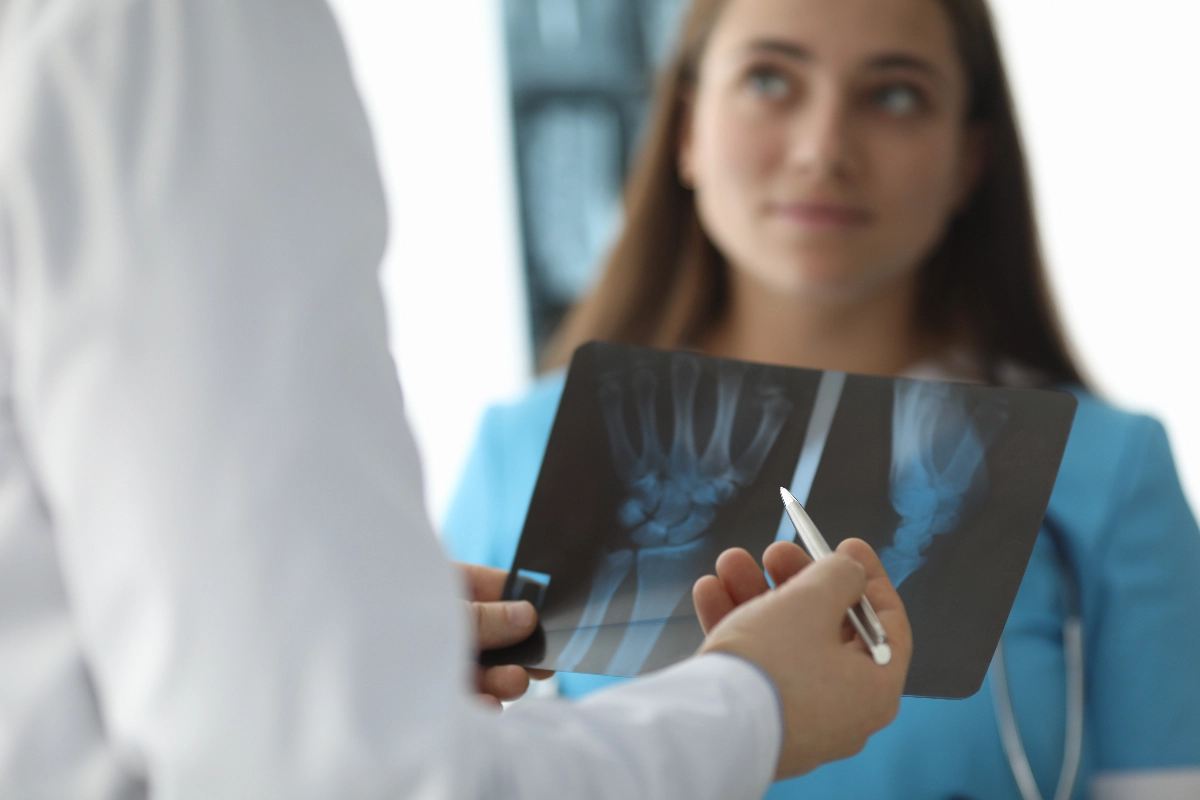
- The Initial Consultation with Dr. French: Your journey begins with a detailed evaluation. Dr. French will confirm the diagnosis with imaging (bilateral wrist x-rays to compare to your NORMAL wrist and a CT scan ) and discuss the specifics of your fracture or nonunion.
- Preparing for Your Surgery: Our team will provide clear pre-operative instructions.
- The Day of the Procedure: Your surgery is performed as a day procedure in a state-of-the-art private surgical facility. The specific technique will depend on your condition:
A. Primary Repair: For a new fracture, Dr. French will assess the scaphoid with wrist arthroscopy to directly visualize and precisely align the bone fragments, and percutaneously (through the skin via a pinhole incision) insert a specialized headless screw to compress and stabilize the fracture.
B. Late Reconstruction: For a nonunion, the procedure is more complex. Traditional surgery involves long incisions to expose the fracture site, remove any unhealthy tissue, packing the gap with a Bone Graft to stimulate healing, and inserting a screw into the scaphoid under direct vision. In some cases, a vascularized bone graft can be used, where a piece of bone with its own artery and vein is transferred from the knee joint using microsurgery to bring a new blood supply to the area. In the past decade in Europe and Asia and in Dr. French’s practice, Arthroscopic Bone Grafting (ABG) has replaced most of these techniques with higher healing rates (in excess of 95%), a much quicker recovery, and far fewer complications because the blood supply to the scaphoid is not stripped away as it is with open techniques. A second, short procedure is done under local anesthetic at 3 months to remove the 3 temporary K-wires (pins) that were placed through the skin to initially stabilize the scaphoid and bone graft.
- Anesthesia and Comfort: You will be made comfortable with anesthesia to ensure a pain-free experience.
- Smoking Cessation: The profound negative impact of smoking on wound healing in general and bone healing in the scaphoid bone especially, cannot be understated. Inhaling the smoke of any burning substance (tobacco leaves in cigarettes, marijuana leaves in a joint) causes blood vessels to constrict. The already poor blood supply to something like the scaphoid is further compromised. In fact, one marijuana joint has the same effect as an entire pack of cigarettes ….. because there is no filter! There is good news however: the effects of smoking on wound and bone healing are reversible in only 6-8 weeks. Patients who are off smoking (gummies and patches are just fine) for 6 weeks before surgery and 6 weeks after will reduce their risk of complications down to that of a non-smoker. Dr. French will insist on this for scaphoid surgeries since continued smoking during that period around surgery will pretty much guarantee that the scaphoid will not heal.
Patience and Protection: The Keys to Healing
The scaphoid bone is a slow healer, even after a perfect surgical repair.
- Initial Immobilization: For acute fractures, one of the advantages of early arthroscopic-assisted screw fixation is the ability to come out of a cast at 1-2 weeks. This avoids the inevitable stiffness and hygiene problems associated with prolonged casting. For scaphoid non-unions, after ABG procedures, you will be in a removable splint for 3 months, at which point the temporary pins will be removed. Your healing will be monitored with X-rays and/or a CT scan.
- Augmenting Your Own Bone Healing: Bone growth stimulators are a modern technology using Low-Intensity Pulsed Ultrasound (known as L.I.P.U.S.) that are highly beneficial in accelerating bone healing. A small ultrasound probe is applied once a day for 20-minutes by the patient at home directly over the site of a fracture. At a frequency LESS than a fetal ultrasound, these devices provide a painless once-a-day treatment at home that is shown in large studies to increase healing rates in bone. You can discuss this optional treatment with Dr. French at the time of the consultation to see if it is an appropriate option for you.
- Rehabilitation: Once healing is confirmed, you will begin working with a Certified Hand Therapist to regain your wrist’s range of motion and strength.
- The Outcome: The goal of surgery is to achieve a solid union of the scaphoid bone, which provides pain relief, restores strength, and, most importantly, prevents the onset of devastating wrist arthritis, allowing you to return to your high-level activities.
Frequently Asked Questions
How long does it take for a scaphoid fracture to heal?
The scaphoid is one of the slowest-healing bones in the body. Even with surgery, it typically takes a minimum of 8-12 weeks of immobilization for the bone to heal, and sometimes longer. Certain fractures and nonunions are amenable to non-invasive treatment with a Bone Growth Stimulator, thereby avoiding surgery.
Do I need surgery for a scaphoid fracture?
If the fracture is perfectly aligned (undisplaced), it can sometimes be treated in a cast or its healing augmented with a Bone Growth Stimulator. However, for any fracture that is displaced or for active individuals who want the most predictable outcome, surgery is often the best and most reliable option to ensure healing and prevent complications.
What is a scaphoid nonunion?
A nonunion is when the scaphoid bone fails to heal together after a fracture. This leads to persistent pain, weakness, and will eventually cause the wrist joint to develop severe arthritis if it is not surgically corrected.
What are the risks of surgery?
The biggest risk is that the bone may still fail to heal (nonunion), even after surgery. Other risks are rare but can include infection, hardware issues, stiffness, and nerve irritation. Dr. French will discuss all risks with you in detail, along with impressing the paramount importance of no smoking of cigarettes or marijuana in the 6 weeks before and 6 weeks after your surgery.